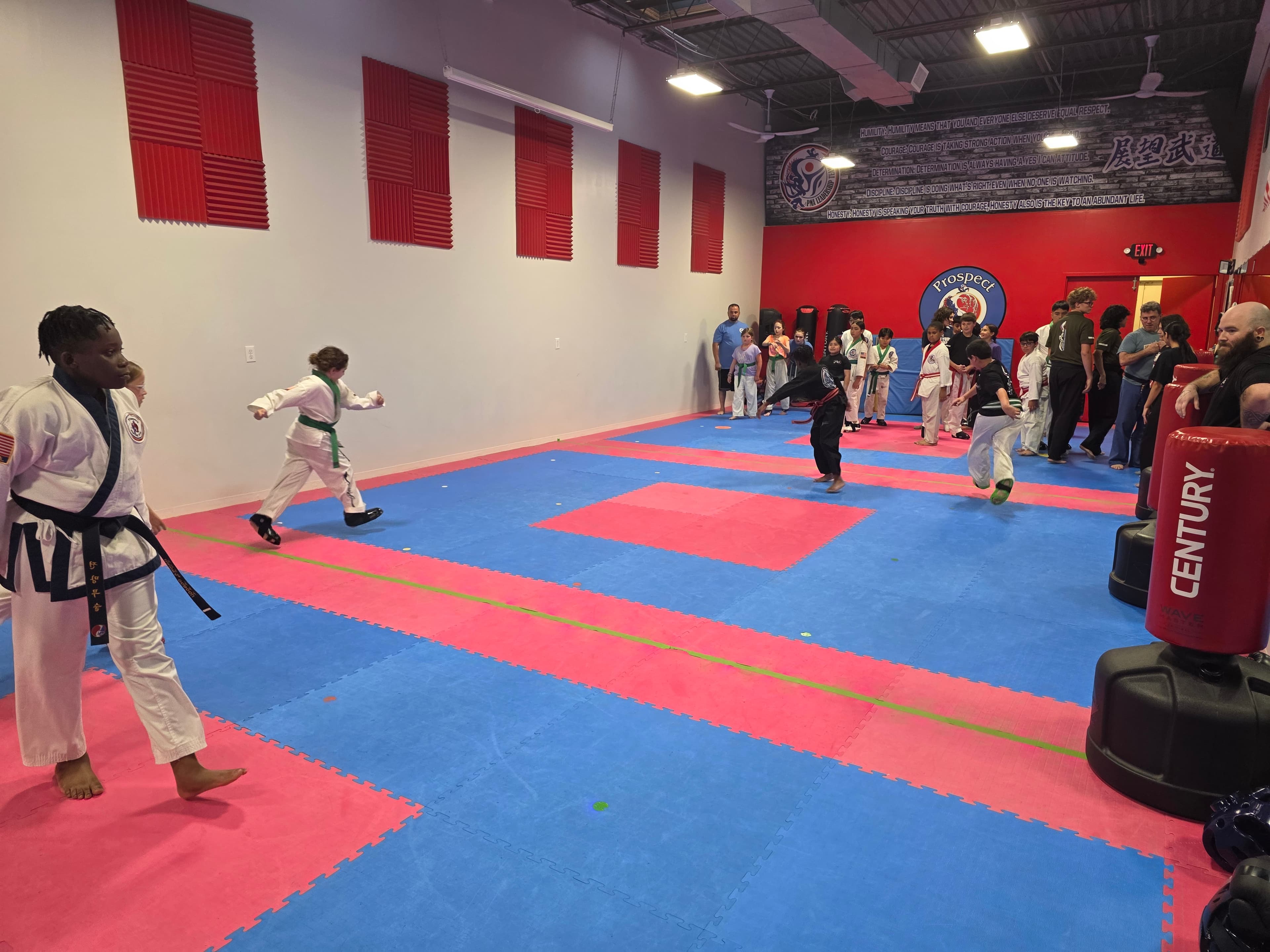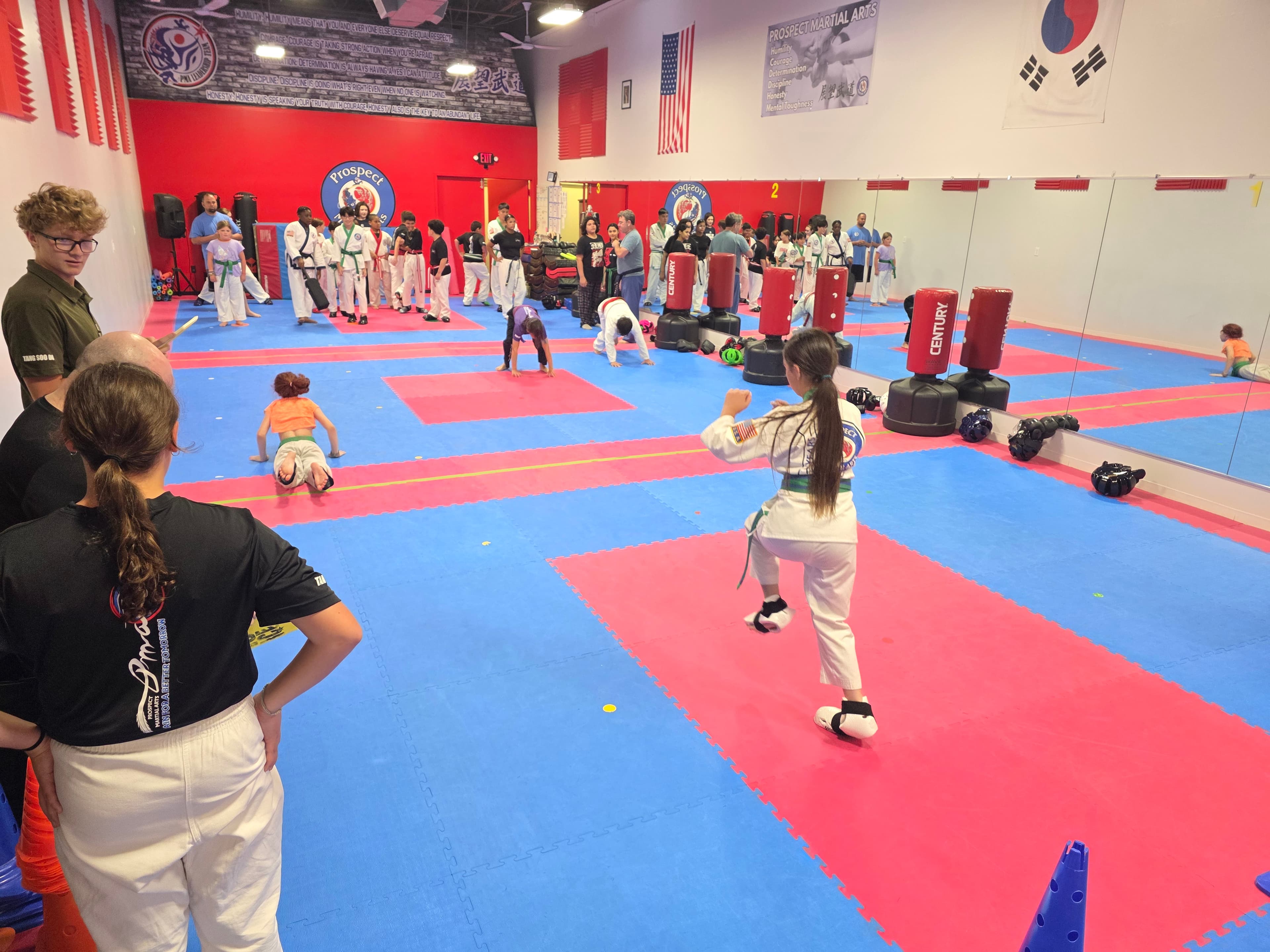
Every parent watching their first belt test has the same questions: What do the colors mean? How long does each one take? And what does it really take to earn a black belt?
Here's a complete guide to how belt ranking works in Tang Soo Do — the traditional Korean martial art we teach at Prospect Martial Arts in Prospect, CT.
Where Belt Ranks Come From
The colored belt system is younger than most people think. It was introduced in the early 1900s by Jigoro Kano, the founder of Judo, and spread to Karate, Taekwondo, Tang Soo Do, and nearly every modern martial art. Before that, many arts had just two ranks: student and teacher.
The genius of the system is motivational. Instead of one impossibly distant goal, students climb a staircase of achievable ones — each belt close enough to reach, meaningful enough to matter.
How Tang Soo Do Ranks Work
Tang Soo Do uses two rank categories:
- Gup ranks — the colored belts, counting down from 10th gup (beginner) toward 1st gup. Lower number = higher rank.
- Dan ranks — the black belt degrees, counting up from 1st dan onward.
Between the gup ranks and black belt sits a special rank: Cho Dan Bo, the "black belt candidate" — an apprentice period where students prove they're ready for the responsibility the black belt carries.
What Each Stage Represents
White belt: the beginning
White symbolizes a blank page. A white belt's job is simple and hard: show up, listen, and learn how to learn. Basic stances, first blocks and strikes, and the etiquette of the dojang.
Early colored belts: building the foundation
Through the early ranks, students learn fundamental kicks and hand techniques, their first forms (hyungs), and the rhythm of training. Progress is fast here by design — early wins build the habit of showing up.
Intermediate ranks: the proving ground
The middle belts are where martial artists are actually made. Techniques get harder, forms get longer, sparring gets real, and the novelty has long worn off. Students learn the art's deepest lesson at this stage: keep going anyway. Many students who quit, quit here — which is exactly why finishing this stage changes kids.
Advanced ranks and Cho Dan Bo: refinement
Advanced students shift from learning techniques to mastering them — sharper forms, controlled sparring, self-defense applications, and often helping teach junior students. Leadership becomes part of the curriculum.
Ready to see it for yourself? Your first class at Prospect Martial Arts is always free. Book your free trial class here — no commitment, no experience needed.
Black belt: the real beginning
Here's the truth every master repeats: black belt is not the end. In Korean arts, 1st dan is understood as the point where you've learned the alphabet — now you can start reading. That's why dan ranks continue upward for a lifetime; our own instructors at PMA range from 1st to 5th degree, and Master Capolupo continues training and learning after decades in the art.
How Long Does Each Belt Take?
At Prospect Martial Arts, a student training consistently can expect roughly 2–4 months between early belt tests, with longer gaps at advanced ranks. The full journey from white belt to black belt realistically takes about four years of consistent training.
Could it be faster? Some schools promote faster — and we'd gently suggest that's a warning sign, not a selling point. A belt that isn't earned teaches the opposite of what martial arts is for.
What Happens at a Belt Test
Students demonstrate their curriculum in front of instructors and families: forms, techniques, self-defense, sparring at appropriate ranks, and — just as important — attitude and effort. Testing is a performance under pressure, and learning to deliver one is part of the training. When a student ties on a new belt in front of the people who watched them earn it, that moment sticks for life.
The Belt Is a Byproduct
Parents sometimes ask how fast their child can get a black belt. We'd offer a reframe: the belt is a byproduct. The four years of showing up, failing, adjusting, and succeeding — the focus, resilience, and confidence built along the way — that's the product. The belt just makes it visible.
Come watch it happen. Our Kids & Teens program and adult program both follow the full TSDMA-recognized Tang Soo Do curriculum.
Ready to Start?
Prospect Martial Arts is located at 73 Waterbury Road, Unit 2, Prospect, CT 06712 — minutes from Waterbury, Naugatuck, Cheshire, and Bethany. We teach traditional Tang Soo Do for ages 3 through adult, and your first class is always free.
Book your free trial class or call us at (203) 441-5358 — we'd love to meet you.
Your First Class Is Free
Come see Prospect Martial Arts for yourself — no commitment, no experience needed.